
Valerian

Valeriana officinalis L. – Valerianaceae
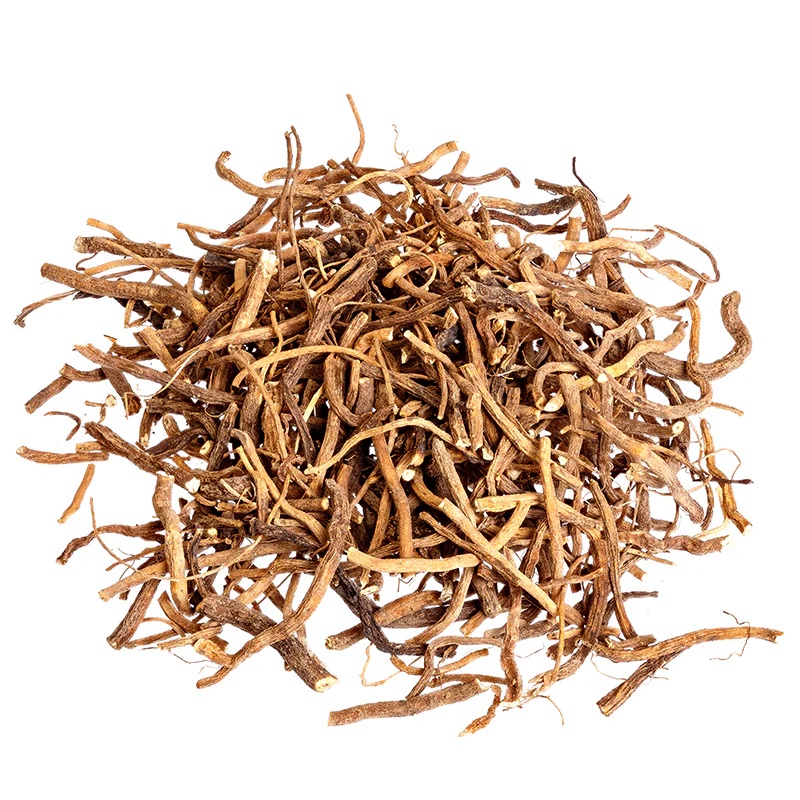
Valerian is a perennial herbaceous plant belonging to the Valerianaceae family and has been used since ancient times in traditional medicine for various health problems. The plant is found in Europe and temperate regions of Asia. It is cultivated mainly in Central Europe, England, France, Eastern Europe, Japan and the USA. Valerian can be grown in sandy, humus soil that is rich in lime and located in a humid area. The root is harvested in September. The fresh roots are washed, chopped and carefully dried in air circulating below 40°C. The medicinal parts are carefully dried, the underground parts and the dried roots.
The plant is 50 to 100 cm tall and has a short, cylindrical rhizome with bushy, round roots. The stem is erect and unbranched. The leaves are oddly pinnate. The roots and rhizomes of Valeriana spp. are rich in essential oils, iridoids, avonoids, alkaloids, amino acids and lignanoids, which possess a characteristic smell or aroma and are used as medicines based on their bioactivities, which include inducing sedation, promoting sleep, antidepressant and anti-anxiety effects. Another, less well-known use of valerian should not be neglected either, so this plant has a diuretic effect, and also has a positive effect on cognitive functions. It is an excellent option in the treatment of insomnia, nervous tension, caused by great stress. In experiments on animals, it has been proven that valerian has sedative, anxiolytic, spasmolytic, muscle relaxant and antiulcerogenic properties.
The pharmacological effectiveness of the plant depends a lot on the quality of the extract used. The main effect in humans is a reduction in the time it takes to fall asleep. In vitro, components of valerenic acid have been shown to reduce the breakdown of gamma-aminobutyric acid (GABA). An increase in available GABA is one factor that may be responsible for the sedative properties.
INDICATIONS AND USE
Approved by Commission E: Nervousness and insomnia
Unproven use: Valerian is used for restlessness, sleep disorders caused by nervous conditions, mental strain, lack of concentration, irritability, stress, headache, epilepsy, hysteria, nervous cardiopathy, menstrual disturbances, menopause, neuralgia, fainting, stomach cramps, uterine spasms and anxiety states.
PRECAUTIONS AND ADVERSE REACTIONS
There are no known health risks associated with the proper use of certain therapeutic doses. Gastrointestinal complaints can occur in rare cases, and contact allergies in very rare cases. With long-term use, the following may occasionally occur: headache, restlessness, insomnia, mydriasis, heart function disorders.
Drug interactions: Valerian can enhance the effect of other central nervous system depressants. Animal studies have shown that valerian has an additive effect when used in combination with barbiturates and benzodiazepines. Although there was no evidence of potentiation of the CNS depressant effect when combined with alcohol, the use of valerian in combination with alcohol is not recommended. Due to the sedative effect of valerian, driving or operating machinery should be avoided for several hours after taking valerian products. The use of valerian during pregnancy or in nursing mothers is not recommended due to lack of evidence.
Valerian root is available in the form of capsules, tablets or aqueous-ethanol extracts, so that everyone can choose the form that suits them best.
Valeriana spp. is now listed in the European and American pharmacopoeias. It is also sold as a dietary supplement and is one of the best-selling natural medicines in Europe and the USA. In addition, Valeriana spp. has high medicinal and economic value in the food, beverage and cosmetic industries due to its distinctive aroma.
The EMA (European Food and Medicines Agency) prescribes valerian preparations as a traditional herbal remedy to relieve mild symptoms of mental stress and to help with sleep. Valerian contributes to optimal mental and physical relaxation, reduces spasms and digestive disorders, promotes the health of the cardiovascular system, helps induce and maintain natural sleep.